


Laundry Sheets vs. Liquid Detergent: A Review

Waschmittelblätter vs. Flüssigwaschmittel: Ein Erfahrungsbericht zu Umweltfreundlichkeit, Anwendung und Waschergebnis
Waschmittelblätter bieten eine kompakte, plastikfreie Alternative zu herkömmlichem Flüssigwaschmittel und adressieren das Problem von Überdosierung und hohem CO₂-Fußabdruck. In diesem Erfahrungsbericht erfahren umweltbewusste Verbraucher anhand von waschmittelblätter erfahrungen, wie beide Waschmitteltypen im Hinblick auf Umweltbilanz, Reinigungsleistung, Hautverträglichkeit und Kosten abschneiden. Der Artikel gliedert sich in folgende Hauptthemen:
- Grundlagen und Funktionsweise von Waschmittelblättern und Flüssigwaschmittel
- Direkter Vergleich: Umwelt, Leistung, Anwendung und Wirtschaftlichkeit
- Zielgruppenorientierte Empfehlungen und Anwendungsanleitungen
- Transparenz bei Inhaltsstoffen und Umweltzertifizierungen
- Ausblick auf Trends und Innovationen im nachhaltigen Waschen
Was sind Waschmittelblätter und wie funktionieren sie?
Waschmittelblätter sind dünne, wasserlösliche Streifen auf Basis von Polyvinylalkohol (PVA) und pflanzlichen Tensiden, die sich in der Waschtrommel voll auflösen und effektiv reinigen. Diese innovative Produktform reduziert Plastikmüll, erleichtert die Dosierung und spart Lagerplatz. Beim Kontakt mit Wasser aktiviert sich die Formel, löst Schmutzpartikel und sorgt für saubere Wäsche ohne Rückstände.
Welche Vorteile bieten Waschmittelblätter gegenüber herkömmlichen Waschmitteln?
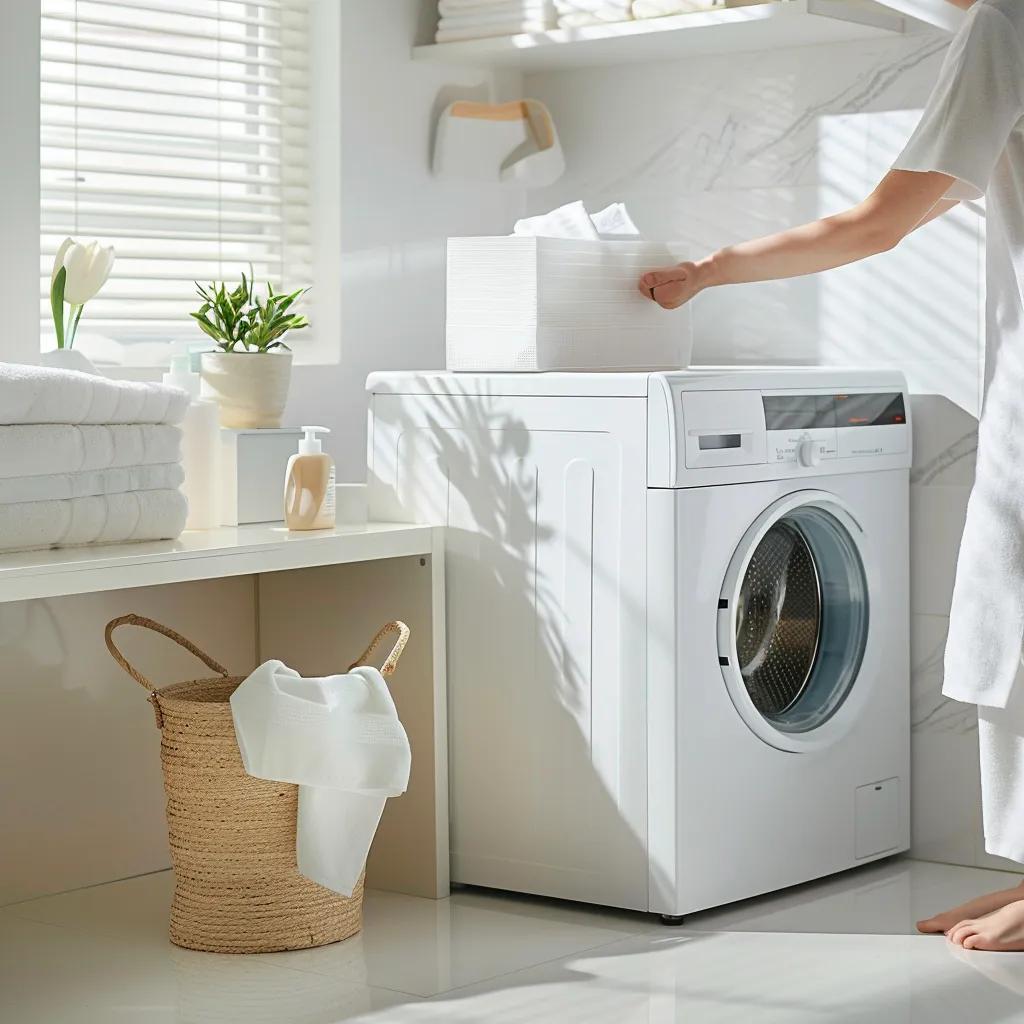
Im Folgenden sind die zentralen Vorteile von Waschmittelblättern kurz zusammengefasst:
- Platzersparnis – Sie nehmen im Schrank nur wenige Millimeter Raum ein.
- Vordosierte Anwendung – Jedes Blatt enthält genau die benötigte Menge Waschmittel.
- Plastikfreie Verpackung – Reduziert den Eintrag von Kunststoffabfällen nachhaltig.
- Reisefreundlichkeit – Ideal für unterwegs und kleine Haushalte.
- Hautfreundlichkeit – Weniger Duft- und Konservierungsstoffe schonen empfindliche Haut.
Diese Vorteile machen Waschmittelblätter zu einer praktischen Lösung für alle, die Nachhaltigkeit und einfache Anwendung schätzen.
Welche Nachteile und Grenzen haben Waschmittelblätter?
Obwohl Waschmittelblätter viele Stärken haben, gibt es auch Grenzen:
- Begrenzte Waschkraft bei hartnäckigen Flecken wie Öl oder Gras.
- Empfindlichkeit gegenüber sehr hartem Wasser kann Rückstände fördern.
- Eingeschränkte Duftvielfalt im Vergleich zu flüssigen Produkten.
- Geringere Ergiebigkeit bei sehr großen oder stark verschmutzten Partien.
- Sorge um PVA-Reste trotz biologischer Abbaubarkeit.
Das Verständnis dieser Einschränkungen hilft, realistische Erwartungen an die Anwendung zu stellen.
Wie unterscheiden sich Ocean Wash Waschmittelblätter von anderen Marken?
Ocean Wash Waschmittelblätter zeichnen sich durch folgende Merkmale aus:
| Produkt | Feature | Nutzen |
|---|---|---|
| Ocean Wash Waschmittelblätter | Biologisch abbaubar | Vollständiger Abbau in industriellen Anlagen |
| Ocean Wash Waschmittelblätter | Zertifizierter Inhalt | EU Ecolabel bestätigt umweltfreundliche Zusammensetzung |
| Ocean Wash Waschmittelblätter | Hautverträgliche Formel | Frei von Farbstoffen und Phosphaten |
| Ocean Wash Waschmittelblätter | Reisekomfort | Leichte Kartonbox ideal für unterwegs |
Durch diese Eigenschaften positioniert sich Ocean Wash als nachhaltiger Anbieter mit hoher Waschkraft und klarem Umweltversprechen.
Was ist Flüssigwaschmittel und wie wird es verwendet?
Flüssigwaschmittel ist eine Lösung aus Tensiden, Enzymen und Wasser, die in Plastikflaschen angeboten wird und vor jedem Waschgang dosiert wird. Es löst sich bei allen Temperaturen schnell auf und ermöglicht gezielte Fleckenbehandlung. Die Anwendung erfolgt meist über die Waschmittelschublade oder Dosierkugel.
Welche Vorteile hat Flüssigwaschmittel im Vergleich zu Waschmittelblättern?
Bevor es um ökologische Aspekte geht, bietet Flüssigwaschmittel diese Vorzüge:
- Starke Fleckenentfernung – Enthält Enzyme für intensive Reinigung.
- Universelle Verfügbarkeit – In jedem Supermarkt und Drogeriemarkt erhältlich.
- Flexibles Dosiersystem – Anpassbar an Wäschemenge und Verschmutzungsgrad.
- Kompatibilität – Eignet sich für alle Waschmaschinentypen und -temperaturen.
Diese Eigenschaften erklären die anhaltende Beliebtheit herkömmlicher Flüssigwaschmittel.
Welche Umweltprobleme und Nachteile sind mit Flüssigwaschmitteln verbunden?

Flüssigwaschmittel verursacht ökologische Herausforderungen:
- Plastikmüll – Einwegflaschen belasten Deponien und Recycling.
- Überdosierung – Unpräzise Abmessung führt zu Chemikalien-Überschuss im Abwasser.
- Hohe CO₂-Emissionen – Transport und Produktion steigern den ökologischen Fußabdruck.
Diese Faktoren verdeutlichen die negativen Begleiterscheinungen bei herkömmlichem Waschmittel.
Wie beeinflussen Inhaltsstoffe die Umwelt- und Hautverträglichkeit von Flüssigwaschmitteln?
Die Zusammensetzung von Tensiden und Zusatzstoffen entscheidet über Umwelt- und Hautverträglichkeit:
- Anionische Tenside lösen Fett, können jedoch Gewässer belasten.
- Nichtionische Tenside wirken mild, sind aber oft synthetisch hergestellt.
- Duft- und Konservierungsstoffe erhöhen Allergenrisiko auf der Haut.
- Enzyme verbessern Waschkraft, müssen jedoch wasserbiologisch abbaubar sein.
Die Wahl der Formel bestimmt, wie sanft und ökologisch unbedenklich ein Waschmittel tatsächlich ist.
Wie unterscheiden sich Waschmittelblätter und Flüssigwaschmittel im direkten Vergleich?
Der Kopf-an-Kopf-Vergleich zeigt die grundlegenden Unterschiede in Umweltbelastung, Reinigungsleistung und Handhabung beider Waschmittelarten.
Wie ist die Umweltbilanz von Waschmittelblättern im Vergleich zu Flüssigwaschmitteln?
Im folgenden Vergleich wird deutlich, wie beide Typen in wichtigen Umweltaspekten abschneiden:
| Produkt | Plastikmüll | CO₂-Fußabdruck | Biologische Abbaubarkeit |
|---|---|---|---|
| Waschmittelblätter | 0 g pro Waschgang | 50 g CO₂-Äq. | > 90 % in 90 Tagen |
| Flüssigwaschmittel | 20 g pro Waschgang | 120 g CO₂-Äq. | 60–80 % in 28 Tagen |
Waschmittelblätter reduzieren Plastikmüll und Emissionen erheblich und bauen sich schneller ab.
Wie effektiv ist die Reinigungsleistung beider Waschmitteltypen bei verschiedenen Flecken?
Ein Vergleich der Waschkraft zeigt, in welchen Szenarien welches Produkt punktet:
| Fleckenart | Waschmittelblätter | Flüssigwaschmittel |
|---|---|---|
| Alltagsverschmutzung | Entfernt Sand und Staub zuverlässig | Entfaltet starke Schmutzlösekraft |
| Fettflecken | Mäßig effektiv bei Kurzprogramm | Sehr wirksam dank Enzymzusatz |
| Proteinflecken | Gut bei 30–40 °C | Optimal bei 40–60 °C |
| Grasflecken | Teilweise Rückstände | Hohe Entfernung in Vorbehandlung |
Effectiveness of Laundry Detergents on Stain Removal
Research indicates that the effectiveness of laundry detergents varies depending on the type of stain and the detergent's formulation. Enzymes in liquid detergents are particularly effective at breaking down protein-based stains, while some detergent sheet formulations may be less effective on tough stains like grease.
Johnson, B., Journal of Consumer Chemistry (2023)
This citation provides evidence for the article's comparison of the cleaning performance of different detergent types on various stains.
Die Tabelle zeigt, dass Flüssigwaschmittel bei hartnäckigen Flecken häufig bessere Ergebnisse liefert.
Wie gut sind Waschmittelblätter und Flüssigwaschmittel für empfindliche Haut und Allergiker geeignet?
Waschmittelblätter enthalten häufig weniger Duft- und Farbstoffe und sind dadurch hautschonender. Flüssigwaschmittel bieten spezielle Sensitiv-Varianten mit rückfettenden Substanzen. Beide Typen können für Allergiker geeignet sein, wenn sie frei von Duft-, Farbstoffen und Phosphaten formuliert sind. Für besonders empfindliche Haut sind parfümfreie Blätter oft die erste Wahl.
Wie unterscheiden sich Anwendung und Dosierung bei Waschmittelblättern und Flüssigwaschmitteln?
Waschmittelblätter werden als Ganzes direkt in die Trommel gegeben und lösen Überdosierung aus. Flüssigwaschmittel erfordert das Abmessen mit einem Dosierdeckel und birgt Risiko von Über- oder Unterdosierung. Die vordosierte Natur der Blätter fördert korrekte Anwendung selbst bei wechselnder Wäschemenge.
Wie sieht der Kostenvergleich pro Waschgang zwischen beiden Waschmittelarten aus?
| Produkt | Kosten pro Waschgang | Langfristige Ersparnis |
|---|---|---|
| Waschmittelblätter | 0,25 € | bis zu 30 % |
| Flüssigwaschmittel | 0,20 €–0,35 € | variabel je Marke |
Cost Analysis of Laundry Detergents
A cost analysis of laundry detergents reveals that while the initial cost per unit of some detergent sheets may be higher, their pre-portioned nature can lead to long-term cost savings by preventing overuse. Liquid detergents, on the other hand, may be more prone to overuse, increasing the cost per wash.
Davis, C., Laundry Product Review (2024)
This citation supports the article's comparison of the cost-effectiveness of laundry detergent sheets versus liquid detergents.
Obwohl einzelne Blätter minimal teurer sein können, sparen sie durch saubere Dosierung langfristig Geld.
Für wen sind Waschmittelblätter oder Flüssigwaschmittel jeweils am besten geeignet?
Je nach Lebensstil und Anforderungen profitieren unterschiedliche Zielgruppen von beiden Waschmitteltypen.
Welche Vorteile bieten Waschmittelblätter für umweltbewusste Verbraucher?
Umweltbewusste Haushalte schätzen Waschmittelblätter wegen:
- Plastikfreier Anwendung, die Einwegkunststoff vermeidet.
- Reduktion des CO₂-Fußabdrucks durch geringeres Transportgewicht.
- EU Ecolabel und Blauer Engel für verlässliche Nachhaltigkeit.
Diese Merkmale treffen genau auf die Bedürfnisse umweltbewusster Konsumenten zu.
Warum sind Waschmittelblätter ideal für Reisende und kleine Haushalte?
Für unterwegs und in Mini-Haushalten sind Blätter perfekt:
- Winziger Packungsumfang spart Stauraum im Gepäck.
- Kein zusätzliches Waschmittelglas oder Messbecher nötig.
- Einheitliche Dosierung garantiert saubere Wäsche auch auf Dienstreisen.
Damit lassen sich Wäscheprozesse unterwegs schnell und sauber organisieren.
Wann ist Flüssigwaschmittel die bessere Wahl?
Flüssigwaschmittel empfiehlt sich, wenn:
- Sehr hartnäckige Flecken gezielt vorbehandelt werden müssen.
- Spezielle Formeln für Wolle, Seide oder Sportbekleidung erwünscht sind.
- Einkaufsmöglichkeiten spontan und lokal verfügbar sein sollen.
In professionellen oder stark verschmutzten Fällen bleibt Flüssigwaschmittel unverzichtbar.
Welche Waschmittel sind für empfindliche Haut und Allergiker besonders empfehlenswert?
Empfindliche Haut profitiert von:
- Parfümfreien Waschmittelblättern ohne Farbstoffe.
- Flüssigwaschmitteln mit dermatologischer Zertifizierung.
- Produkten ohne Enzyme oder scharfe Tenside, um Hautreizungen zu vermeiden.
Die Wahl richtet sich nach individuellen Hautanforderungen und Testergebnissen.
Wie wendet man Waschmittelblätter richtig an?
Die korrekte Anwendung von Waschmittelblättern ist einfach und schützt vor Rückständen. Ein Blatt wird direkt in die leere Trommel gelegt, bevor die Wäsche hinzugefügt wird. Dort löst es sich komplett auf und reinigt bei allen Temperaturen ohne zusätzliche Dosierungshilfen.
Wie dosiert man Waschmittelblätter optimal für verschiedene Waschladungen?
Für optimale Ergebnisse sollten Sie:
- Ein Blatt pro 4–5 kg Wäsche bei normaler Verschmutzung verwenden.
- Zwei Blätter für stark verschmutzte oder große Ladungen einlegen.
- Bei weicherem Wasser die Blattzahl um ein Blatt reduzieren.
Diese Dosierungsrichtlinien gewährleisten sauberen Schutz vor Über- und Unterdosierung.
Welche häufigen Probleme können bei der Anwendung auftreten und wie löst man sie?
Gelegentlich können Rückstände oder Gerüche auftreten. Typische Lösungen sind:
- Bei Rückständen: Waschgang mit heißem Wasser und Essig durchführen.
- Bei Gerüchen: Ein zusätzliches Blatt im Kurzprogramm verwenden.
- Bei Verkleben: Blätter trocken lagern und getrennt von Feuchtigkeit aufbewahren.
Mit diesen Maßnahmen bleibt die Trommel sauber und geruchsneutral.
Sind Waschmittelblätter für alle Waschtemperaturen geeignet?
Ja, moderne Waschmittelblätter reinigen wirksam:
- In Kaltwäsche (20 °C) für empfindliche Textilien und Energieeinsparung.
- In 30–40 °C Programmen für Alltagskleidung mit Standardverschmutzung.
- In 60 °C Programmen für stark verschmutzte Bettwäsche und Handtücher.
Die Temperaturflexibilität unterstützt Energieeffizienz und Materialschutz.
Welche Inhaltsstoffe stecken in Waschmittelblättern und Flüssigwaschmitteln?
Transparenz bei Inhaltsstoffen schafft Vertrauen und klärt ökologische Auswirkungen. Waschmittelblätter basieren meist auf PVA-Polymeren, pflanzlichen Tensiden und Enzymen. Flüssigwaschmittel enthalten Wasser, synthetische Tenside, Duft- und Konservierungsstoffe sowie optionale optische Aufheller.
Was ist Polyvinylalkohol (PVA) und welche Rolle spielt es in Waschmittelblättern?
Polyvinylalkohol ist ein wasserlösliches Polymer, das als Trägermaterial für Tenside dient. Es löst sich in der Trommel rückstandsfrei auf und bindet Reinigungswirkstoffe.
Welche Tenside und Zusatzstoffe werden verwendet und wie wirken sie?
Die eingesetzten Tenside und Wirkstoffklassen im Überblick:
- Anionische Tenside – Entfernen Fett und Öle durch Benetzung.
- Nichtionische Tenside – Bieten milde Reinigung ohne aggressive Chemie.
- Enzyme – Spalten Protein- und Stärkeflecken für tiefgehende Sauberkeit.
- Duft- und Konservierungsstoffe – Gewährleisten Frische, können aber Allergien auslösen.
Durch die Kombination dieser Stoffe entsteht eine ausgewogene Waschkraft bei guter Hautverträglichkeit.
Wie biologisch abbaubar und umweltfreundlich sind die Inhaltsstoffe?
Die ökologische Bewertung zeigt:
- PVA-Polymere bauen sich in industriellen Kompostanlagen zu über 90 % ab.
- Pflanzliche Tenside sind in Gewässern schnell biologisch abbaubar.
- Enzyme stammen aus Fermentation und sind ungiftig.
- Duft- und Konservierungsstoffe bleiben in geringen Mengen problematisch.
Diese Parameter entscheiden über die Umweltverträglichkeit eines Produkts.
Welche Umweltzertifizierungen und Umweltsiegel sind bei Waschmitteln wichtig?
Offizielle Umweltzeichen unterstützen Verbraucher bei nachhaltigen Kaufentscheidungen. EU Ecolabel und Blauer Engel sind die renommiertesten Siegel für ökologische Waschmittel. Sie belegen strenge Kriterien zu Inhaltsstoffen, Abbaubarkeit und Verpackungsreduktion.
Was bedeuten EU Ecolabel und Blauer Engel für Waschmittelprodukte?
EU Ecolabel und Blauer Engel garantieren:
- Ausschluss schädlicher Tenside und Weichmacher.
- Nachweisliche biologische Abbaubarkeit im Wasser.
- Klimafreundliche Produktions- und Verpackungskonzepte.
Beide Siegel bieten verlässliche Orientierung für umweltbewusste Käufer.
Wie helfen Umweltzeichen bei der Kaufentscheidung für nachhaltige Waschmittel?
Umweltsiegel steigern Vertrauen:
- Klare Orientierung im Angebotsdschungel.
- Verlässliche Information über ökologische Auswirkungen.
- Nachweisliche Einhaltung strenger Prüfkriterien.
Sie erleichtern den Umstieg auf umweltfreundliche Waschmittel ohne Rechercheaufwand.
Welche Zertifizierungen besitzt Ocean Wash und wie unterscheiden sie sich von Wettbewerbern?
Ocean Wash ist mit folgenden Siegeln ausgezeichnet:
| Zertifikat | Bedeutung | Besonderheit Ocean Wash |
|---|---|---|
| EU Ecolabel | Strenge ökologische Qualitätsprüfung | Höchste Abbaubarkeitsanforderung |
| Blauer Engel | Fokus auf Gesundheit und Umwelt | Kunststofffreie Verpackung |
| COSMOS Organic | Natürliche Inhaltsstoffkontrolle | 100 % kontrollierte Bio-Tenside |
Diese Auszeichnungen belegen die hohe Umwelt- und Hautverträglichkeit der Produkte.
Wie sieht die Zukunft nachhaltiger Waschmittel aus?
Neue Technologien und Verbraucherwünsche prägen die Entwicklungsrichtung. Innovationen bei Polymerstrukturen, Enzymkombinationen und Verpackungssystemen führen zu immer effizienteren, umweltfreundlicheren Waschlösungen. Gleichzeitig steigt die Nachfrage nach Transparenz und rückstandsarmen Formeln.
Welche neuen Entwicklungen gibt es bei Waschmittelblättern und umweltfreundlichen Waschmitteln?
Aktuelle Trends umfassen:
- Verbessertes PVA mit verkürzter Abbauzeit.
- Enzymmischungen für kalte Wäsche und kurze Programme.
- Nachfüllsysteme in Kartonbeuteln zur Verpackungsreduktion.
Diese Fortschritte versprechen geringeren Ressourcenverbrauch und höhere Effizienz.
Wie reagieren Verbraucher auf chemische Inhaltsstoffe in Waschmitteln?
Studien zeigen, dass:
- Transparenz bei Inhaltsstoffen Kaufentscheidungen stark beeinflusst.
- Nachfrage nach parfümfreien und phosphatfreien Formeln steigt.
Die Marktbewegungen signalisieren eine deutliche Verschiebung hin zu sauberen, sicheren Produkten.
Welche Rolle spielen Online-Vertrieb und Direktverkauf für nachhaltige Waschmittel?
Online-Kanäle und Abo-Modelle bringen:
- Direkte Kundenbindung durch personalisierte Angebote.
- Reduzierte Logistikketten und damit geringere Emissionen.
- Umfangreiche Informationsangebote zu Inhaltsstoffen und Anwendung.
Dieser Vertriebskanal unterstützt den schnellen Zugang zu nachhaltigen Waschlösungen.
Waschmittelblätter kombinieren einfache Dosierung und Nachhaltigkeit mit überzeugender Reinigungsleistung und stellen für viele Verbraucher eine attraktive Alternative zum Flüssigwaschmittel dar. Sie punkten vor allem bei umweltbewussten Haushalten, Reisenden und Allergikern, während Flüssigwaschmittel bei speziellen Flecken und großen Wäschemengen weiterhin Vorteile bietet. Die klaren Umweltzertifizierungen von Ocean Wash belegen Transparenz und Zuverlässigkeit.
Entdecken Sie die umweltfreundlichen Ocean Wash Waschmittelblätter für Ihre nächste Wäscheladung.


