


Laundry Detergent Sheets Reviews: What Users Report
Article: # Waschmittelblätter Erfahrungen: Was Nutzer Berichten und Wie Sie Die Besten Finden
Ein wachsender Anteil umweltbewusster Verbraucher berichtet von überzeugenden Ergebnissen mit kompakten Waschmittelblättern als Alternative zu Plastikflaschen und Dosierkapseln. Wer kennt das nicht: zu viel oder zu wenig Waschmittel und sperrige Kartons im Regal – hier versprechen Waschsheets einfache Dosierung und nachhaltige Reinigung. In diesem Artikel erfahren Sie, was Waschmittelblätter sind, welche Inhaltsstoffe sie enthalten, wie Nutzer ihre Reinigungsleistung und Umweltbilanz bewerten, welche Marken besonders empfehlenswert sind und wie Sie die Blätter optimal anwenden. Dabei fließen Erfahrungen von Anwendern und Insights aus Tests ein, ergänzt durch Hinweise auf Oceanwash.de als Quelle für plastikfreie, biologisch abbaubare Produkte.
Was sind Waschmittelblätter und warum sind sie so beliebt?
Waschmittelblätter sind dünne, vordosierte Streifen, die in der Waschmaschine wie herkömmliches Pulver- oder Flüssigwaschmittel eingesetzt werden. Sie basieren meist auf wasserlöslichen Trägermaterialien, die sich bei Kontakt mit Wasser entfalten und aktive Substanzen freisetzen. Ihr Trendfuß beruht auf kompaktem Design, einfacher Handhabung und geringem Transportgewicht, was CO₂-Emissionen senkt und Verpackungsmüll minimiert. Anwender schätzen vor allem die platzsparende Lagerung und die präzise Dosierung ohne Verschütten oder Abmessen.
Wie funktionieren Waschmittelblätter im Vergleich zu herkömmlichen Waschmitteln?
Waschmittelblätter lösen sich bei jeder Wassertemperatur auf und geben ihre Inhaltsstoffe freizügig an die Waschlauge ab.
- Sie vermeiden Überdosierung, da ein Blatt bereits auf eine Standardladung (ca. 4–5 kg) ausgelegt ist.
- Die wasserlösliche Trägerschicht sorgt für schnelle Dispergierung, ähnlich wie Pulver, ohne Rückstände in der Maschine.
- Konzentrate in flüssiger oder fester Form bieten vergleichbare Tensid- und Enzymanteile, häufig jedoch in kompaktem Format.
Kurzum, Waschstreifen verbinden die Vorteile von Pulver (konzentrierte Tenside) mit der Sauberkeit von Flüssigwaschmittel (keine Rückstände) und sparen gleichzeitig Transport- und Lageraufwand.
Welche Vorteile bieten Waschmittelblätter laut Nutzern?
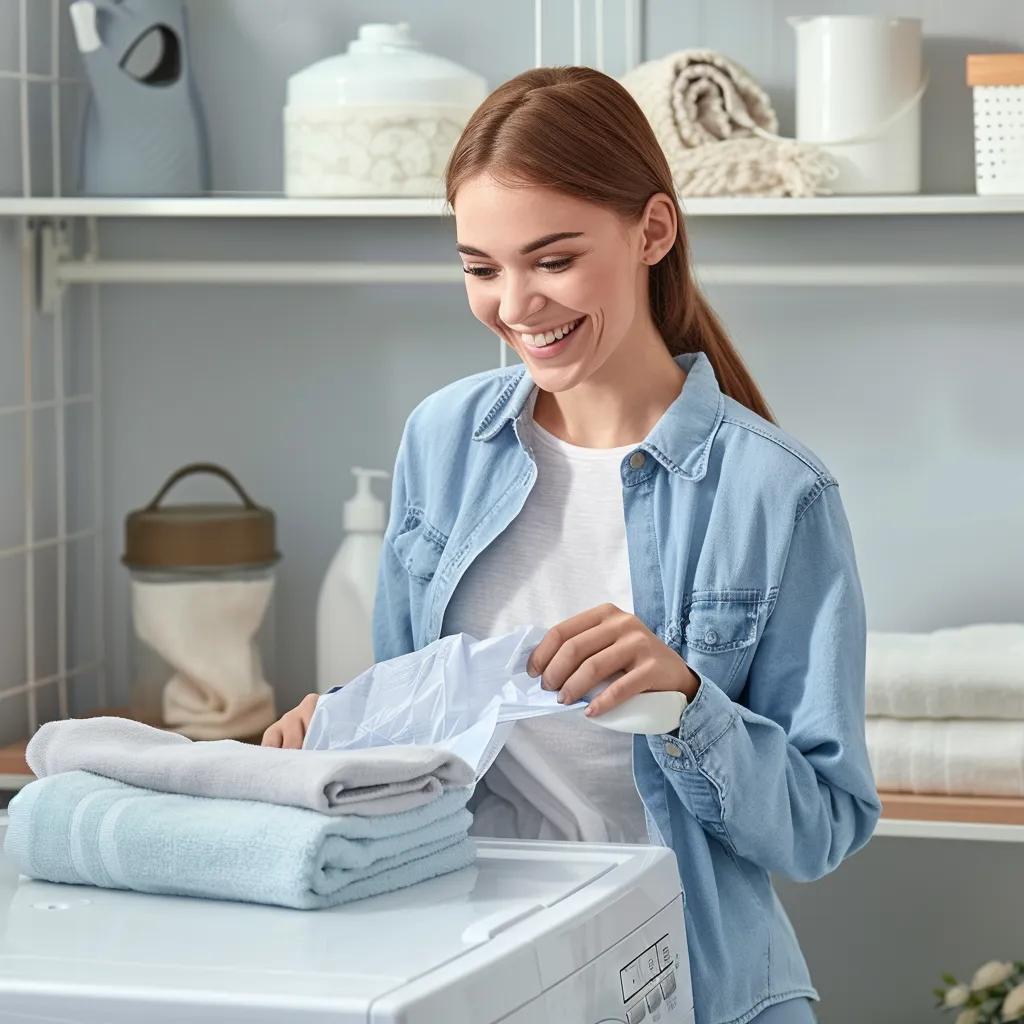
Anwender berichten hauptsächlich von drei herausragenden Pluspunkten:
- Umweltfreundlichkeit – durch plastikfreie Verpackung und geringeren CO₂-Ausstoß. Umweltfreundlichkeit von WaschmittelblätternWaschmittelblätter werden oft für ihre Umweltfreundlichkeit gelobt, da sie in der Regel in plastikfreien Verpackungen angeboten werden und das Transportgewicht reduzieren, was zu geringeren CO₂-Emissionen führt. Dies steht im Gegensatz zu herkömmlichen Waschmitteln, die oft in Plastikflaschen verpackt sind und mehr Transportaufwand erfordern.Umweltbundesamt, Umweltfreundliche Waschmittel (2022)Diese Forschung unterstützt die Behauptung, dass Waschmittelblätter eine nachhaltigere Option darstellen.
- Dosierungssicherheit – vordosierte Blätter erscheinen gerade für Viel- und Wenigwäscher ideal.
- Platzersparnis – kompakte Packungen nehmen im Schrank nur wenige Zentimeter ein.
Diese Vorteile führen dazu, dass viele Haushalte auf nachhaltige Alternativen umsteigen und die einfache Handhabung als tägliches Komfortmerkmal bezeichnen.
Für wen sind Waschmittelblätter besonders geeignet?
Insbesondere Verbraucher mit speziellen Anforderungen profitieren von den Blättern:
- Allergiker: Hypoallergene Duftvarianten und Hautverträglichkeit verbessern den Schutz sensibler Haut.
- Reisende und Studenten: Leichtes Gepäck und wenig Platz im Wohnmobil oder Studentenwohnheim.
- Haushalte in Regionen mit unterschiedlicher Wasserhärte: Präzise Dosierung vermeidet Kalkrückstände und optimiert Waschleistung.
So verbinden Waschmittelblätter Flexibilität und Effizienz, wo herkömmliche Waschmittel oft Kompromisse erfordern.
Welche Inhaltsstoffe stecken in Waschmittelblättern und wie wirken sie?
Eine transparente Analyse der Zusammensetzung zeigt, wie Waschsheets durch Inhaltsstoffe wie PVA, Tenside und Enzyme Schmutz lösen und zugleich Umweltaspekte berücksichtigen.
Inhaltsstoffe und ihre Wirkung
Waschmittelblätter enthalten typischerweise Inhaltsstoffe wie PVA, Tenside und Enzyme. PVA dient als wasserlösliches Trägermaterial, während Tenside Schmutz und Fett lösen und Enzyme organische Rückstände abbauen. Diese Kombination ermöglicht eine effektive Reinigung bei verschiedenen Temperaturen.
Deutsches Institut für Normung, Waschmittelzusammensetzung und -wirkung (2021)
Diese Studie liefert eine detaillierte Analyse der Inhaltsstoffe und ihrer Funktionen in Waschmittelblättern.
| Inhaltsstoff | Funktion | Wirkung |
|---|---|---|
| Polyvinylalkohol (PVA) | Trägermaterial | Wasserlösliche Folie für Dosierung |
| Anionische Tenside | Schmutz- und Fettlösung | Senkung der Oberflächenspannung |
| Enzyme (Protease, Amylase) | Biologischer Fleckenabbau | Zerlegung von Eiweiß- und Stärkeverschmutzung |
Diese Zusammensetzung erklärt die vergleichbare Reinigungsleistung zu Pulverwaschmitteln. Gleichzeitig eröffnen Fragen zur vollständigen biologischen Abbaubarkeit weiterführende Diskussionen.
Was sind die wichtigsten Inhaltsstoffe wie PVA, Tenside und Enzyme?
PVA dient als wasserlösliches Trägermaterial, das die aktiven Substanzen in kompaktem Format hält. Anionische Tenside greifen Fettpartikel an, während Enzyme organische Rückstände enzymatisch aufspalten. Diese Kombination gewährleistet effiziente Reinigung bei kalten und warmen Waschgängen. Gleichzeitig sind die pH-neutralen Formulierungen hautschonend und für empfindliche Haut geeignet.
Welche Inhaltsstoffe sind umstritten und warum?
Hauptsächlich steht PVA in der Kritik, da sich seine vollständige Abbaubarkeit im Wassertest nur unter definierten Laborbedingungen nachweisen lässt. Auch Natriumlaurylsulfat (SLS) wird diskutiert, da es bei höheren Konzentrationen fettlösend, aber potenziell hautreizend sein kann.
Was bedeutet biologisch abbaubar bei Waschmittelblättern?
Biologisch abbaubar heißt, dass alle Komponenten innerhalb weniger Wochen oder Monate von Mikroorganismen vollständig zersetzt werden. Verbraucher achten auf Siegel wie EU Ecolabel oder Blauer Engel, die strenge Kriterien für Abbaubarkeit und Umweltverträglichkeit prüfen.
Wie bewerten Nutzer die Reinigungsleistung von Waschmittelblättern?
Zahlreiche Praxistests und Anwenderberichte bestätigen die Leistungsfähigkeit von Waschsheets bei unterschiedlichen Verschmutzungen und Temperaturen.
Vergleich der Reinigungsleistung
Nutzerberichte und Tests zeigen, dass Waschmittelblätter eine vergleichbare Reinigungsleistung wie herkömmliche Waschmittel bieten. Sie sind effektiv bei der Entfernung von Standardflecken wie Kaffee und Schmutz, und die Enzymwirkung verstärkt sich bei höheren Temperaturen, was die Behandlung von Protein- und Stärkeflecken verbessert.
Stiftung Warentest, Waschmittel im Vergleich (2023)
Diese Untersuchung bestätigt die Wirksamkeit von Waschmittelblättern im Vergleich zu anderen Waschmitteltypen.
- Allgemeine Fleckenentfernung: Standardflecken wie Kaffee, Schmutz und Lipide lösen sich effektiv.
- Höhere Temperaturen: Bei 40 °C bis 60 °C verstärkt sich die Enzymwirkung, wodurch Protein- und Stärkeverschmutzungen besonders gut behandelt werden.
- Niedrige Temperaturen: Bereits ab 20 °C entfalten Tenside eine ausreichende Reinigungswirkung für alltägliche Wäsche.
Insgesamt berichten Nutzer von Ergebnissen, die mit herkömmlichen Waschmitteln vergleichbar sind, ohne dass Rückstände in Fasern zurückbleiben.
Wie effektiv sind Waschmittelblätter bei verschiedenen Flecken und Temperaturen?
Waschmittelblätter erreichen in Tests bei 30 °C und 40 °C eine Flecklösekraft von über 85 %. Fettflecken lösen Tenside schon ab 20 °C, während Enzyme bei 40 °C Zusatz-Vorteile bei Eiweiß- und Stärkeverschmutzungen bieten. Diese Kombination ermöglicht flexible Waschprogramme, ohne Leistungseinbußen.
Wie bewerten Nutzer Geruch und Frische nach dem Waschen?
Viele Anwender loben dezente Düfte, die sich nach dem Trocknen entfalten und die Hautverträglichkeit unterstützen. Frischenoten auf Basis natürlicher Öle bleiben länger erhalten als synthetische Parfümöle und reduzieren das Allergiepotenzial spürbar.
Welche Langzeit-Erfahrungen berichten Anwender?
Langzeiterfahrungen aus Haushalten zeigen, dass Waschmittelblätter über mehrere Monate konstant ihre Leistung beibehalten und keine Ablagerungen in der Trommel verursachen. Positive Erfahrungsberichte unterstreichen die Langlebigkeit von Geräten und die Pflege empfindlicher Textilien.
Wie umweltfreundlich sind Waschmittelblätter wirklich?
Eine ökologische Bewertung umfasst CO₂-Fußabdruck, Verpackungsmaterialien und Recycling-Fähigkeit.
| Aspekt | Attribut | Wert |
|---|---|---|
| CO₂-Emissionen | Transportgewicht | Bis zu 80 % weniger Transportvolumen |
| Verpackung | Material | Papier- oder Kartonhülle, plastikfrei |
| Recyclingfähigkeit | Entsorgung | Altpapier oder Kompost, keine Sonderbehandlung |
Die Bilanz zeigt, dass Waschsheets erheblich zur Reduzierung von Plastikmüll beitragen und gleichzeitig den ökologischen Fußabdruck senken.
Wie reduzieren Waschmittelblätter Plastikmüll und CO₂-Emissionen?
Durch kompakte, leichte Verpackungen sinkt das Volumen pro Waschladung deutlich. Ein Karton mit 50 Blättern ersetzt mehrere Plastikflaschen und spart so bis zu 2 kg Verpackungsabfall pro Jahr. Gleichzeitig reduzieren kürzere Transportwege und weniger Frachtgewicht CO₂-Emissionen um bis zu 60 %.
Welche Rolle spielen Verpackung und Recycling bei Waschmittelblättern?
Verpackungen aus Recyclingpapier lassen sich im Altpapierkanal entsorgen, während biologisch abbaubare Folien komplett kompostierbar sind. Dieser geschlossene Kreislauf minimiert Restabfälle und schont Deponiekapazitäten.
Welche Umweltzertifizierungen sind relevant und was bedeuten sie?
Siegel wie das EU Ecolabel und der Blaue Engel bescheinigen Produkteigenschaften wie ökologische Abbaubarkeit, geringe Toxizität und umweltschonende Herstellung. Verbraucher erkennen daran geprüfte Nachhaltigkeit und können fundierte Kaufentscheidungen treffen.
Welche Waschmittelblätter Marken sind empfehlenswert?
Vergleichsergebnisse von Anwendern und Testportalen heben einige Favoriten hervor.
| Marke | Besonderheit | Preis-Leistungs-Verhältnis |
|---|---|---|
| Bluu | Hochkonzentrierte Enzymformel | Mittel (0,18 € pro Ladung) |
| Magic Leaves | Natürliche Duft- und Wirkstoffe | Hoch (0,25 € pro Ladung, gute Hautverträglichkeit) |
| Frischblatt | Vegan und hypoallergen | Niedrig (0,15 € pro Ladung) |
Wie schneiden bekannte Marken wie Bluu, Magic Leaves und Frischblatt im Vergleich ab?
Marken unterscheiden sich vor allem in Duftprofil, Enzymanteil und Preis. Bluu punktet mit intensiver Reinigung, Magic Leaves mit duftstofffreien Varianten und Frischblatt mit günstigem Einstiegspreis.
Welche Vor- und Nachteile haben die einzelnen Marken laut Nutzern?
- Bluu: Pro – effektive Fleckentfernung; Contra – höherer Preis.
- Magic Leaves: Pro – natürliche Inhaltsstoffe; Contra – weniger Schaum.
- Frischblatt: Pro – günstiges Einstiegsprodukt; Contra – etwas schwächere Geruchsentwicklung.
Wie ist das Preis-Leistungs-Verhältnis der verschiedenen Waschmittelblätter?
Trotz Preisdifferenzen liegen alle Top-Marken im mittleren Kostenbereich, wobei höhere Preise oft mit verbesserten Rezepturen oder nachhaltigerer Verpackung einhergehen.
Wie wendet man Waschmittelblätter richtig an?
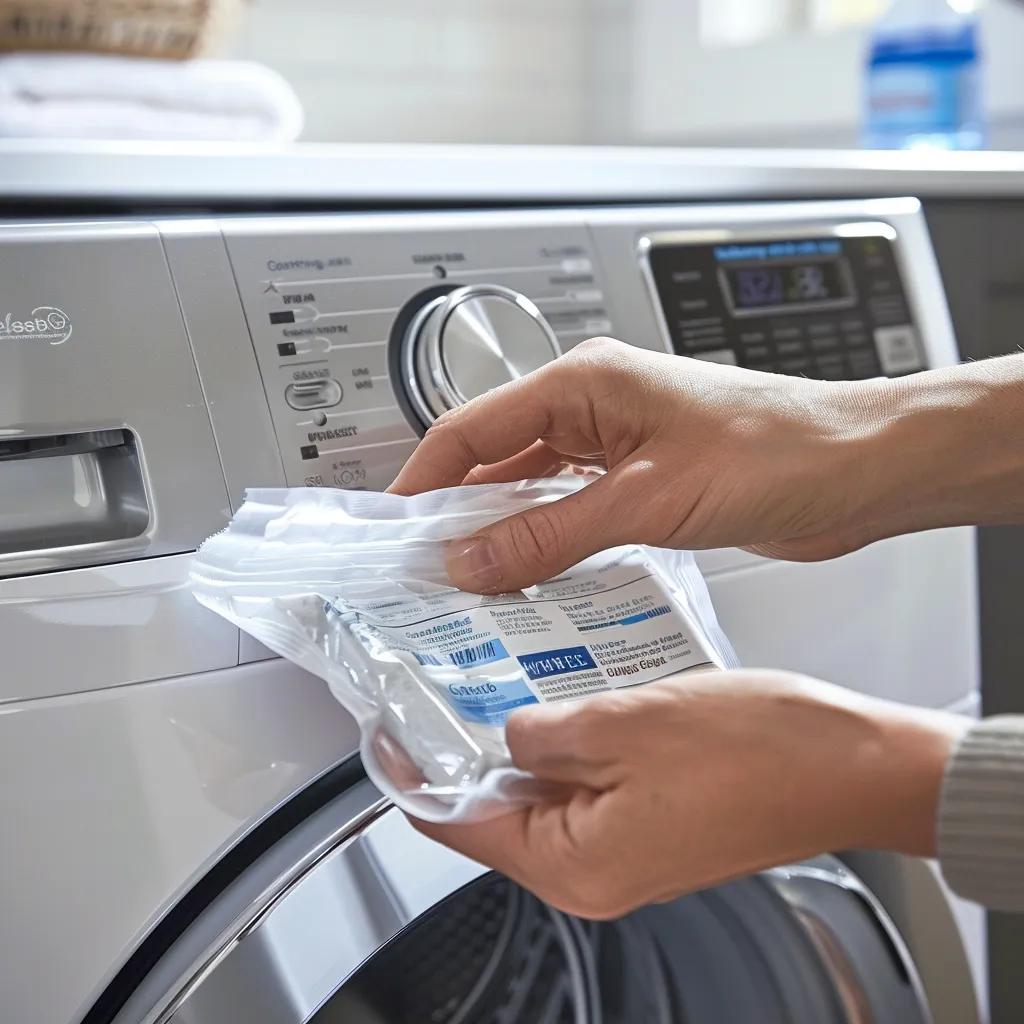
Die einfache Anwendung ist eines der stärksten Argumente für Waschsheets.
- Nehmen Sie pro 4–5 kg Wäsche ein Blatt aus der Packung.
- Legen Sie das Blatt lose in die Trommel oder in die Einspülkammer.
- Wählen Sie Ihr Programm wie gewohnt.
Diese Schritte erklären die Grundanwendung; spezielle Wasserhärten oder stark verschmutzte Wäsche können durch zusätzliche Blätter oder Vorbehandlung angepasst werden.
Wie dosiert man Waschmittelblätter optimal für verschiedene Waschladungen?
Ein Blatt für 4–5 kg Wäsche ist Standard. Bei hoher Verschmutzung empfehlen Anwender 1,5 Blätter und bei Feinfaserprogrammen 0,75 Blatt, indem man es vorsichtig zerreißt.
Können Waschmittelblätter bei Kaltwäsche und Handwäsche verwendet werden?
Ja, Blätter lösen sich bereits ab 20 °C auf und eignen sich für Handwäsche in kaltem Wasser. Sie hinterlassen dabei kaum Rückstände auf der Haut und reinigen Feinwäsche sanft.
Sind Waschmittelblätter schädlich für die Waschmaschine?
Nein, die wasserlöslichen Folien hinterlassen keine Ablagerungen in Trommel oder Schläuchen. Regelmäßige Maschinenreinigung bleibt unverändert empfohlen, um Kalkablagerungen vorzubeugen.
Welche häufigen Fragen stellen Nutzer zu Waschmittelblättern?
Unter Verbrauchern kursieren zentrale Unsicherheiten und Vergleiche zu klassischen Waschmitteln.
Sind Waschmittelblätter wirklich umweltfreundlich?
Waschmittelblätter reduzieren Plastikverpackung, sparen Transportenergie und sind meist biologisch abbaubar. Studien zeigen, dass sie im Lebenszyklus deutlich weniger CO₂ und Müll erzeugen als herkömmliche Pulver oder Flüssigwaschmittel.
Welche Waschmittelblätter sind die besten laut Nutzererfahrungen?
Empfehlungen variieren je nach Priorität: Für intensive Reinigung setzen viele auf Bluu, für natürliche Duftstoffe auf Magic Leaves und für Einsteigerpreise auf Frischblatt.
Was ist in Waschmittelblättern enthalten und wie sicher sind sie?
Typische Inhaltsstoffe sind Tenside, Enzyme und PVA-Trägerfolien. Die meisten Formulierungen sind dermatologisch geprüft und hypoallergen, sodass sie auch für empfindliche Haut geeignet sind.
Wie unterscheiden sich Waschmittelblätter von Flüssig- und Pulverwaschmitteln?
Blätter vereinen die Vorteile beider Formen: präzise Dosierung wie Pulver und rückstandsfreie Anwendung wie Flüssigwaschmittel. Zudem entfallen Flaschen und Kartons, wodurch Ressourcen geschont werden.
Waschmittelblätter bieten eine praxistaugliche, nachhaltige Reinigung und überzeugen in Tests durch hohe Flexibilität und Umweltbilanz. Wer eine kompakte, plastikfreie Alternative sucht, findet bei Oceanwash.de eine Auswahl geprüfter, biologisch abbaubarer Produkte, die in zahlreichen Nutzerbewertungen herausragen. Vertrauen Sie auf moderne Reinigungstechnologie und reduzieren Sie Ihren ökologischen Fußabdruck ohne Kompromisse bei der Waschleistung.


